What Matthew 18 Actually Teaches About Conflict and Restoration
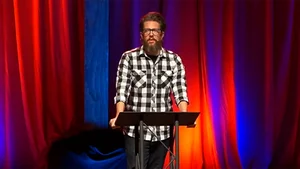
To watch the sermon: To Win A Brother!
Download the Discussion Guide: Download
Download the 5 Day Devotional :Download
Winning a Brother: What Matthew 18 Actually Teaches About Conflict and Restoration
Matthew 18:15-20 is one of the most quoted and most misunderstood passages in the Bible. Most people know it as "the church discipline passage." But Jesus never frames it that way. From beginning to end, this passage is about one thing: winning a brother.
Why Context Matters in Matthew 18
Starting in Matthew chapter 16, Jesus shifts His focus inward. He stops asking what the world thinks about Him and starts asking what His disciples believe. From that point on, everything He teaches is building a model of discipleship for an outward mission.
Matthew 18 is the culmination of that teaching. Jesus has been laying out what a Kingdom community actually looks like. The greatest in the kingdom is the servant. The vulnerable matter. The lost sheep must be pursued. Every lesson points toward one central truth:
Kingdom communities should fight for restoration, not reputation.
What Does "Binding and Loosening" Really Mean?
Before diving into the steps of Matthew 18, it helps to understand what Jesus meant when He gave Peter "the keys to the kingdom" and the authority to bind and loosen.
In first-century Judaism, binding and loosening referred to declaring what was permitted and what was forbidden. It was about practice, about how you go about doing things. Jesus took that authority away from the religious system built on power and placed it in the hands of His apprentices.
This was not permission to boss people around or to cast out demons with spiritual declarations. It was a call to mirror the restorative community of heaven. To permit what heaven permits and forbid what heaven forbids.
The Four Steps Jesus Actually Gives
Step 1: Go Privately
"If another believer sins against you, go privately and point out that offense. If the other person listens and confesses it, you have won that person back." - Matthew 18:15
Notice what Jesus does not say. He does not say build your case. He does not say protect your reputation. He says go. The same word He used when casting out demons. Simple, direct, and powerful.
The goal of going privately is not exposure or embarrassment. It is not about proving who is right. It is about winning a relationship. If they listen, Jesus says you have won a brother. Not an argument. Not a debate. A relationship.
Step 2: Bring One or Two Others
If the person refuses to hear you, bring one or two others with you. This is not about strengthening your legal case. The others are there as mediators and counselors, not as witnesses for the prosecution.
Jesus upholds the Torah's requirement for two or three witnesses, but He transforms its purpose. The witness system no longer exists primarily to condemn. It exists to restore. Even here, the goal has not changed.
Step 3: Bring It to the Church
If the person still refuses to listen, bring it before the church. The goal is not public humiliation. It is not a scarlet letter. It is not cancel culture or character assassination.
The goal is repentance. Because healing and restoration flow from repentance. You cannot have one without the other. Every step in this process is moving toward reconciliation.
Step 4: Treat Them Like a Pagan or Tax Collector
This is where most people stop reading and start celebrating. They hear "treat them like a pagan and a tax collector" and think: cut them off, write them off, forget them.
But consider who wrote the Gospel of Matthew. Matthew was a tax collector. He was not just invited to dinner with Jesus. He was part of Jesus' inner circle. And here we are in the 21st century reading his gospel.
How did Jesus treat tax collectors and pagans? He ate with them. He loved them. He called them. He pursued them. He restored them. Jesus is not giving you permission to hate people. He is showing you how He loved you.
What This Passage Is Not About
It Is Not About Protecting Your Reputation
God is not worried about your reputation. It should matter to you that people think highly of God, not of you. Cover-up culture in the church, across every denomination, is the result of prioritizing institutional reputation over restoration. That is the opposite of what Jesus commands.
It Is Not About Winning the Argument
You might be right. But if you are determined to be "dead right," nobody wins. If you are right and you humble yourself, you might win a brother. That is the better outcome every time.
It Is Not About Them
Here is the hard truth. In almost every conflict, both parties have played a role. We never lead with our own part. We always start with what the other person did. That is the Pharisee Spirit that lives in each of us. The Pharisees did not lack love for God. They lacked the ability to hold themselves to the same standard they held everyone else to.
Why We Struggle to Forgive Others
We forgive ourselves daily. We make decisions that hurt ourselves, and we extend grace to ourselves without thinking twice. But when someone else wrongs us, that grace disappears.
The reason is simple: unresolved hurt seeks vengeance. There is a part of all of us that wants to storm the hill and take the head of whoever hurt us. But the Bible is clear.
"Vengeance is mine, I will repay, says the Lord." - Romans 12:19
When we try to take vengeance into our own hands, we place ourselves in the seat of God's judgment. We are saying, even if only through our actions, that we know better than He does.
What "Where Two or Three Are Gathered" Actually Means
"I also tell you this: If two of you agree here on earth concerning anything you ask, my Father in heaven will do it for you. For where two or three gather together as my followers, I am there among them." - Matthew 18:19-20
This verse is not primarily about prayer meetings. In context, Jesus is saying that when you gather to restore and correct one another, He is in the middle of it. Every difficult conversation, every act of forgiveness, every honest confession, every restored relationship. Jesus says He is there.
We are not the trial lawyers in this courtroom. We are both the guilty parties who need a mediator. And Jesus is that mediator.
The Wilderness Is Not the End
Even in the Torah, when someone was put outside the camp, the goal was not for them to die in the wilderness. It was for them to miss the community, to turn, to repent, and to come back changed.
God does some of His best work in the wilderness. Moses was called there. The Ten Commandments were given there. Jesus overcame Satan there. John the Baptist prepared the way for the Messiah there. The wilderness is not a place void of God's presence. Sometimes it is where He is most present.
What Real Spiritual Warfare Looks Like
Binding and loosening is actual spiritual warfare. But not in the way most people think. Real spiritual warfare is not declaring things over the devil. It is restoring a broken person to the kingdom of heaven.
When the church celebrates what heaven celebrates, the kingdom advances. When the church tolerates what heaven calls sin, the kingdom suffers. The church does not get to create its own standards. Its job is to execute the standard of heaven.
Kingdom Community Is Measured by Who You Fight For
A Kingdom community is not measured by how few conflicts it has. It is measured by how many people it is willing to fight for.
If you have no conflicts in a relationship, you probably do not have a real relationship. Conflict comes with closeness. And every conflict is an opportunity to win a brother rather than gain an enemy.
We want relationships that only involve celebration. But the Bible does not promise those. True love celebrates your wins and refuses to tolerate your sin. That is what Jesus modeled. He did not walk around saying do whatever you want and I will still love you. He pursued, He confronted, He forgave, and He gave His life.
The Whole Point: Everything Is Being Restored
The entire plan for the world is restoration. What was broken in the garden is being made new. A new heaven and a new earth. Everything is moving toward restoration, and we are invited into that process.
Jesus did not expose our sins from a distance. He drew near. He pursued us. He confronted us. He forgave us. And when we are restored, we are called to go do the same for others.
Religion puts people on trial. Jesus puts people on a path home.
Life Application
This week, identify one relationship in your life where there is unresolved conflict or distance. Instead of building your case or waiting for the other person to make the first move, take the step Jesus commands: go. Go privately, go humbly, and go with the goal of winning a brother or sister, not winning an argument.
Before you go, ask yourself these questions:
What role have I played in this conflict, even if I was not the one who started it?
Am I pursuing restoration, or am I protecting my reputation and waiting for justice?
Am I extending to this person the same grace I extend to myself when I fall short?
If Jesus is present in every act of reconciliation, what does it say about my willingness to avoid this conversation?
The goal was never to be right. The goal has always been to win a brother.